Ice cream trucks and icebox cakes

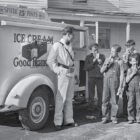
Summers in the 1950s included gleaming white Good Humor trucks whose jingling bells announced that frozen treats had arrived. I’d beg my parents for change and dash to the curb for a creamsicle or toasted almond bar.

Hunting for hungry, hungry hatchlings

In late spring and early summer, many birds take up hunting. This is true even for birds that primarily survive on diets of nuts, berries and seeds throughout the fall and winter. Common birdfeeder species, such as northern cardinal, tufted titmouse and black-capped chickadee, shift from foraging for fruit and seeds to hunting insects, spiders, beetles and caterpillars.
So, what accounts for these seasonal shifts in diet and behavior?

A gardening adventure awaits

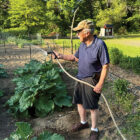
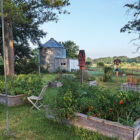
Near the center of town, community gardeners work the soil in the tradition of Granby’s agricultural past. On Hungary Road, in Ahrens Park, kids enthusiastically play ball near the south entrance while gardeners use the next entrance for the Granby Community Gardens. Just as enthusiastically they plant, water and care for their little bit of nature.

Gardening for the plants

“Companion planting” is a good way to think about relationships in the kitchen garden. This is a method of gardening where plants are situated alongside one another for mutual benefit: tomatoes and basil, marigolds and squash, cabbage and thyme, cucumbers and radishes for a few. Each relationship offers something different, whether it’s pest control or shading the soil, attracting pollinators or improving soil fertility.

Ray Haack’s legacy at Christensen Pond

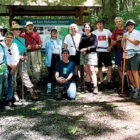
Since 1956, the scenic pond on Wells Road has been open to the public for fishing, picnicking, bird-watching and assorted social gatherings thanks to the generosity of Allen and Carol Christensen, who own the property. The pond has never had an identifying sign, until now.

GLT learns deceit can sometimes be the best solution

In the spring of 2025, visitors to the Granby Land Trust’s Dismal Brook Wildlife Preserve noticed something unusual at the North Marsh: an industrious group of beavers had built a dam directly beneath the footbridge. As a result, water levels rose, the marsh began to resemble a pond, and the altered flow threatened the bridge’s integrity.
The Granby Land Trust was faced with a challenge: how do we protect the marsh, and our bridge, without harming the beavers?