Granby Land Trust
Granby Land Trust — March 2026
|
Support Great Global Cleanup® on Earth Day weekend, Coffee and Cocoa at the Cabin, and Volunteers needed!
Granby Drummer (https://granbydrummer.com/category/grow/page/6/)
Support Great Global Cleanup® on Earth Day weekend, Coffee and Cocoa at the Cabin, and Volunteers needed!
For about 50 years, the Granby Community Garden has played a quiet but meaningful role in Granby’s community life, offering residents a shared place to grow food, learn from one another, and stay connected to the land.
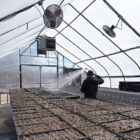
In northern Connecticut, spring gardening (March through May) focuses on indoor seed starting, cleaning up debris, improving soil and planting cool-weather crops. Start peppers, tomatoes and eggplants indoors six to eight weeks before the last frost date.
This is simply delicious! A dear friend worked at Rosie’s Bakery in Boston 40+ years ago and always brought it when she visited.
Bluebird skies and fresh tracks cutting through a blanket of crisp white snow on the Holcomb Tree Trail. Winter is a great time to enjoy the Tree Trail! Grab your snowshoes or cross-country skis and head on over.
Japanese barberry was imported to the US in the late 1800s and widely planted in landscapes, often as hedges to prevent through-passage or in problem areas where other plants did not grow. Once established, it crowds out other plants, changing soil chemistry and inhibiting forest regeneration.
Two harbingers of spring are the mourning cloak butterfly and the rising sap of oak and maple trees. The mourning cloak is one of several species that overwinter as adults, dark brown, almost black, with a line of iridescent spots and a border of bright yellow.
Here is a good example of the Japanese barberry removal technique recommended by the Farmington River Watershed Association.
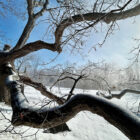
Pete Betsch visited the Granby Oak on Jan. 19 for this stunning photo.
Having had childhood jobs cleaning up after the cows and bringing in their hay on the award-winning Davis farm on North Granby Road, and weeding and harvesting vegetables at Hidden Acres on East Street, it is no surprise that when grown up and looking for places to volunteer, Mark Kennedy ended up at Holcomb Farm.