Bears give back

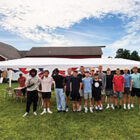
“Nobody is bigger than the G,” says Mike Dombrowski, head coach of the boys’ soccer team at Granby Memorial High School. Dombrowski motioned to the big G painted at the center of the soccer field, explaining that “the G is a symbol that reminds us we are part of much bigger community.”

Announcing new ways to support the Drummer

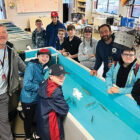
The Drummer is excited to announce three new options to businesses and nonprofits to support our mission, which is to continue to deliver our award-winning local newspaper to every household in Granby free of charge.

How now, brown trout

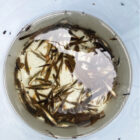
Middle school students at the Salmon Brook Ecology Center have learned that the term “brown trout” might be a misleading common name for the species. Their scales include special, pigmented skin cells called chromatophores, which allow brown trout to routinely change colors.

Electrofishing for (not-so electric) eels in the Salmon Brook

Seven years ago, the National Park Service added the Lower Farmington River and Salmon Brook to the National Wild and Scenic River System, joining the previously designated Upper Farmington River.
The designation recognizes the rich biodiversity, cultural significance, geological features and recreational opportunities within the watershed.

Learn how your local paper gets made

Are you a high school or college student interested in media, marketing or journalism? A retiree curious about the inner-workings of your local newspaper? Or, perhaps you are an aspiring writer, photographer or researcher who wants to learn more about your community.

Come to the Hoedown!

The hoedown has deep roots in farm country. The word hoedown originated in rural America, recalling the ritual end of harvest season when farm workers put down their farm tools to celebrate with a raucous community dance.

Hunting for hungry, hungry hatchlings

In late spring and early summer, many birds take up hunting. This is true even for birds that primarily survive on diets of nuts, berries and seeds throughout the fall and winter. Common birdfeeder species, such as northern cardinal, tufted titmouse and black-capped chickadee, shift from foraging for fruit and seeds to hunting insects, spiders, beetles and caterpillars.
So, what accounts for these seasonal shifts in diet and behavior?