Seven years ago, the National Park Service added the Lower Farmington River and Salmon Brook to the National Wild and Scenic River System, joining the previously designated Upper Farmington River.
The designation recognizes the rich biodiversity, cultural significance, geological features and recreational opportunities within the watershed.
The West Branch of the Salmon Brook, included in this designation, meanders for over a mile through Granby’s portion of the McLean Game Refuge.
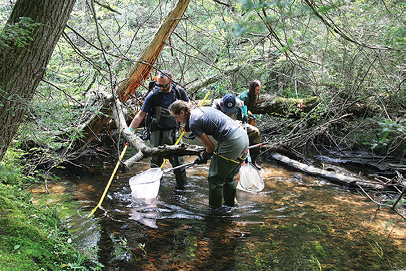
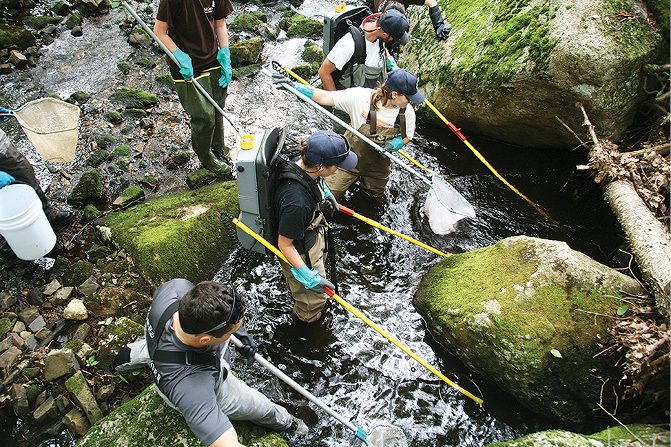
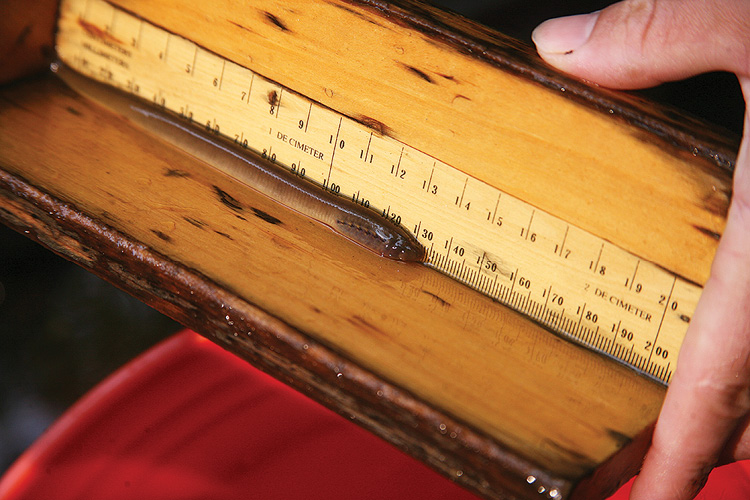
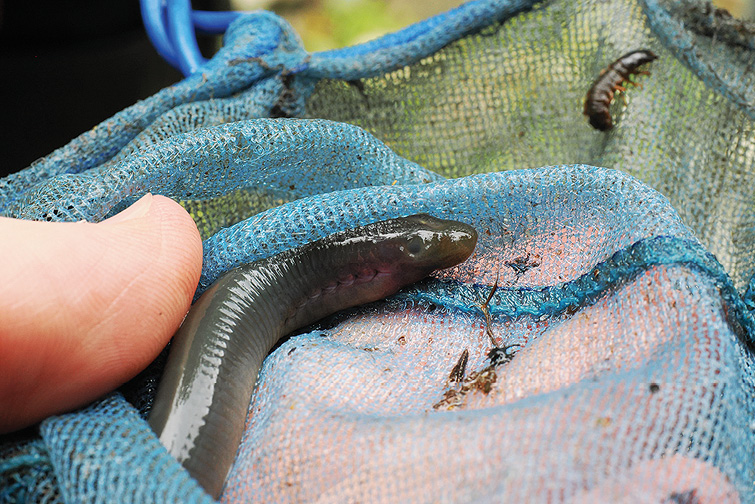
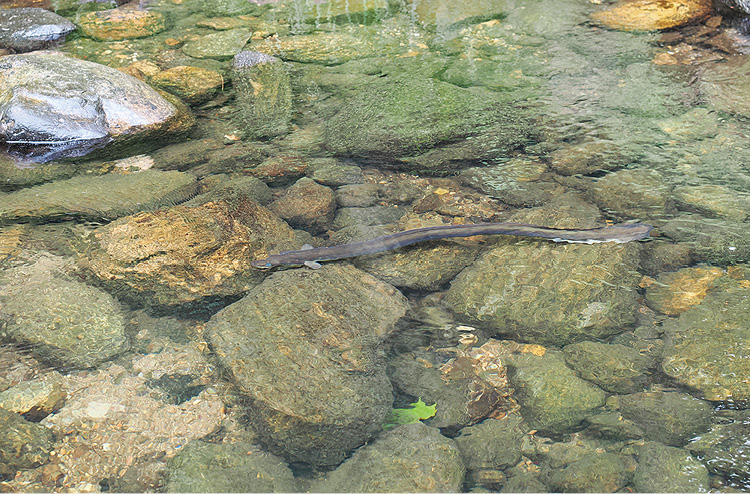
In a recent survey of the brook’s aquatic species, game refuge forest rangers and DEEP fisheries staff reported the presence of American eel (Anguilla rostrata) and the native sea lamprey (Petromyzon marinus). Using electrofishing, in which mild electric currents are introduced into the water with special equipment to temporarily stun fish, the team was able to handle, measure and count fish and other aquatic species before they were safely returned to the river.
The American eel and sea lamprey were of particular note for Game Refuge Director Connor Hogan and his team. “To see eels and lamprey in the Salmon Brook is a good reminder that our waters are connected to the Long Island Sound and the Atlantic Ocean,” Hogan explained.
Eels and lamprey offer fascinating lessons in ecological connectivity.
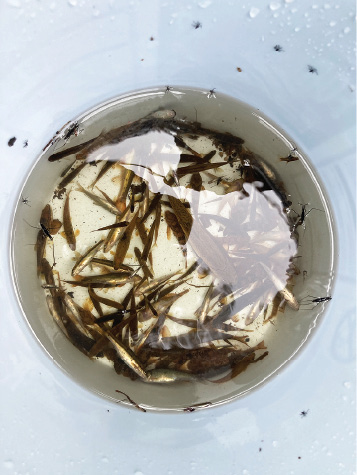
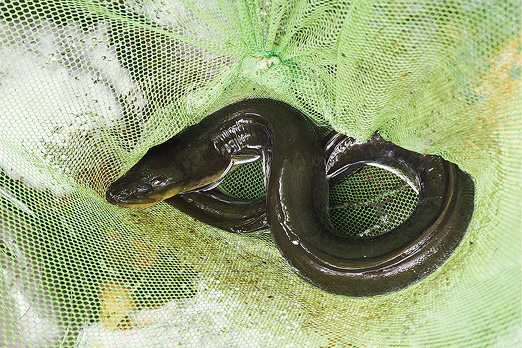
All photos by Connor Hogan, game refuge director
Although the American eel does not use electrical pulses, like the electric eel, to stun and catch prey, it does use very weak electrical fields and electroreceptors for navigation, communication and to locate prey. The American eel is a catadromous species, meaning that it is hatched in saltwater before migrating to freshwater rivers, where it spends most of its life, until it returns to the sea to spawn and die. After hatching in the Sargasso Sea, the flat, larval body of the American eel floats along Atlantic Ocean currents and resembles a leaf. As the larvae near the estuaries of the Long Island Sound, they transform into slender, snake-like glass eels, referring to their transparent bodies.
In the freshwater channels and tributaries of the Connecticut River watershed, the eels become “elvers,” developing pigmentation, before settling into their yellow eel stage, turning a yellowish brown, which helps to camouflage them during the daytime along the river bottom. The nocturnal predators can spend up to twenty years in freshwater rivers, feasting on insects and small fish, before making their return journey to the sea in their final form, known as silver eels, when they stop eating and migrate back to the Sargasso Sea to spawn and die.
Opposite to the American eel, native sea lamprey have an anadromous life cycle. Like salmon, sea lamprey hatch in freshwater rivers, such as the Farmington River, before migrating to the Atlantic Ocean, and returning to the river to spawn and die. Lamprey have earned the nickname “vampire fish” due to their jawless, suction-cup mouth that they attach to other fish to suck blood and other body fluids. However, when native sea lamprey migrate from the Atlantic Ocean back into freshwater rivers, they stop eating, conserving all their energy for spawning. Therefore, they pose no threat to local fish populations throughout the Farmington River and Salmon Brook.
The catadromous American eel and the anadromous sea lamprey offer two fascinating examples of the interconnectivity between saltwater and freshwater ecosystems. Both species bring necessary marine nutrients into the Farmington River watershed, and they each play vital ecological roles across their migratory range.
As Hogan concluded, “We tend to think of the game refuge as an island for wild species, but eels and lampreys remind us that many species rely upon long-distance connectivity between and across ecosystems.”