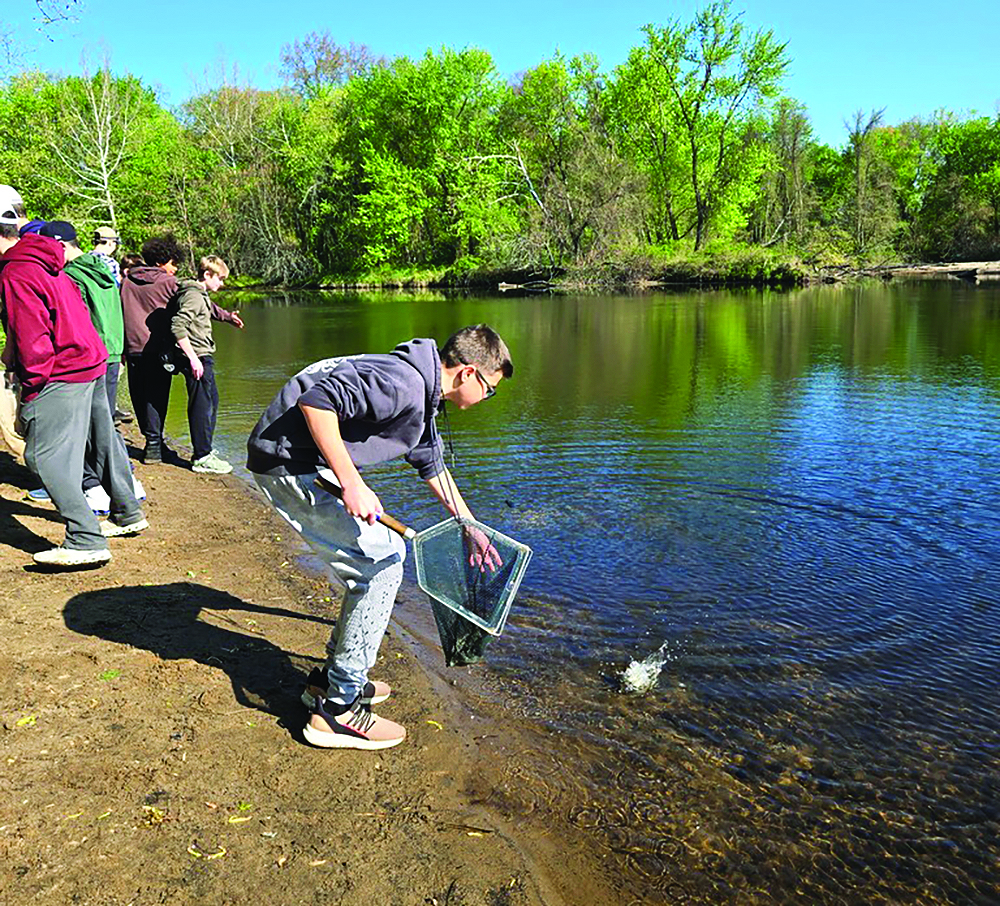
Students from the GMMS Fish Kids club recently took part in a fun field trip designed to bring environmental science lessons out of the classroom and into the field through hands-on learning.
This was a culminating event after raising trout all year in the Salmon Brook Ecology Center, the only middle school fish hatchery in Connecticut. This 30-member club met every week with faculty advisor Ted Goerner to clean, feed and monitor their fish. DEEP provides young fish at the start of the year, eggs in January, and expert guidance from fish pathologist Thomas Chairvolotti throughout the year.
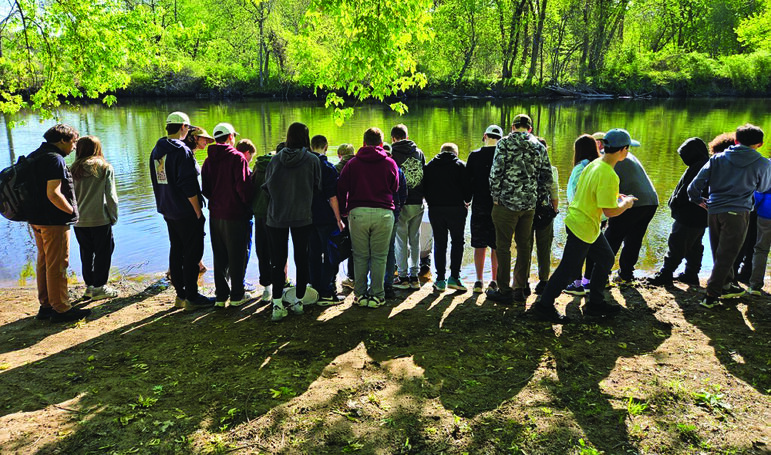
After loading fish into the DEEP truck, students travelled to Tariffville where they released their trout into the river. Fish stocking expert Matt Devine delivered a lesson on how to release and handle fish, aquatic habitats and river ecosystems. He also told students about careers in fisheries, special fishing events and how fish populations are monitored and supported in local water systems.
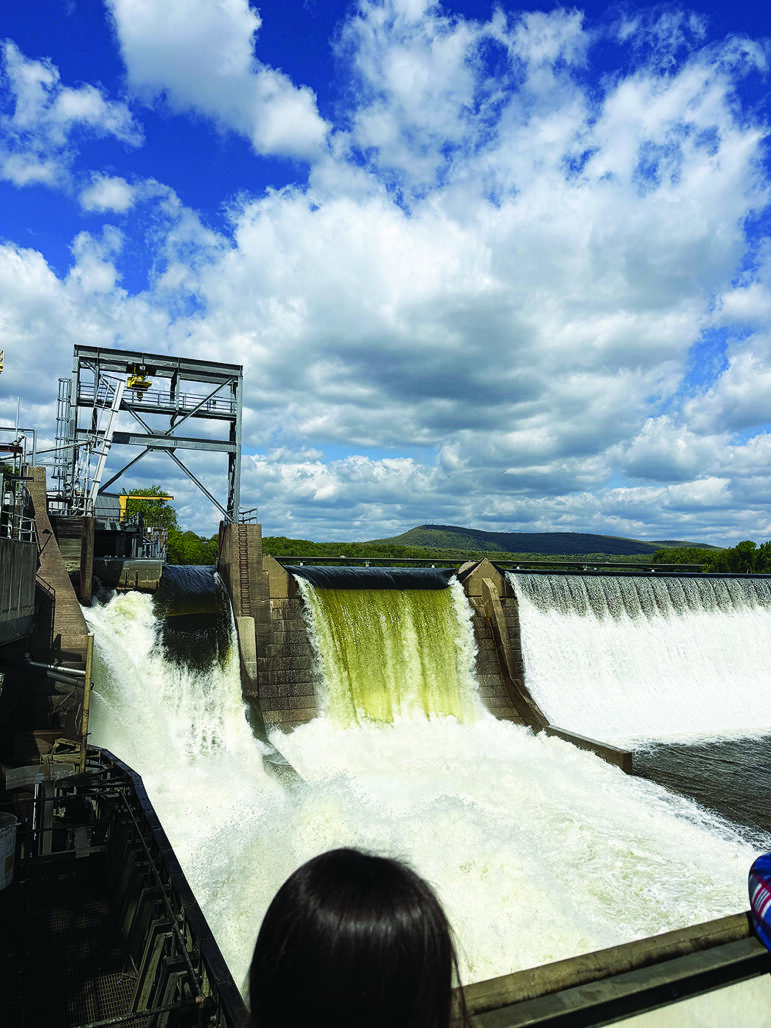
The group then traveled to the Robert E. Barret Fish Elevator at the Holyoke Dam, where students learned about fish migration and the innovative systems to help fish navigate around dams. During peak fish migration, the fish elevator moves 30,000 fish per day. The visit offered students a closer look at how science, engineering and conservation work together to protect regional ecosystems.
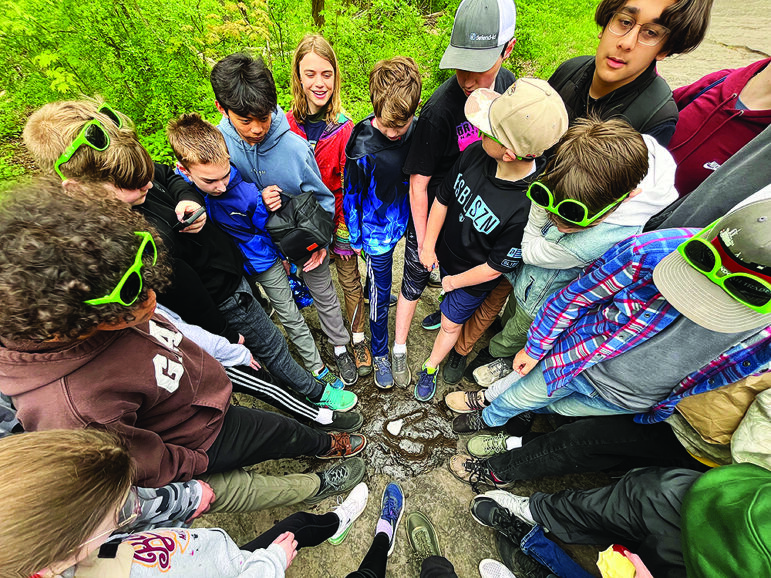
The final stop took students to the Dinosaur Footprint Reservation, where they explored preserved fossil tracks and learned about the area’s prehistoric history. The visit connected environmental science with paleontology, giving students an opportunity to examine evidence of life from millions of years ago.
Earlier in the year, students undertook an experiment related to fish camouflage. Because trout are known to change their colors to match their environment, the Fish Kids Club decided to test that ability with a camouflaged paint scheme in one of their four 500-gallon tanks. This was a student-suggested idea that bore fruit thanks to a GEF grant that paid for the nontoxic epoxy paints that were required. Despite the short trial period of about a month, the Fish Kids did determine that a color change had occurred. Fish in the camouflaged tank had become darker and more spotted than the fish in the traditional sky blue tanks. Students were happy to know that they had given their fish slightly better odds in the wild.
When asked, club advisor Goerner said, “The Salmon Brook Ecology Center is a gem and the students are really fortunate to have this facility on campus. The people who built it 20 years ago were visionaries. It’s a working model of sustainability with solar, geothermal, hydroponics and an outdoor garden in addition to the 2,000-gallon fish hatchery. Classes and the Fish club do actual science there and have to solve problems with their heads and their hands. They have to learn about fluid dynamics, water chemistry, animal behavior—in a team environment. Every week there is some new challenge.” Goemer continued, “This is a pretty complex system of pumps, tanks, chillers and filters. It requires daily vacuuming and monitoring but when everything is running smoothly it’s amazing. This is experiential learning at its best.”
Through interactive experiences and expert-led discussions, students have gained a deeper understanding of the natural environment and the importance of protecting it for future generations.
Submitted by Granby Public Schools