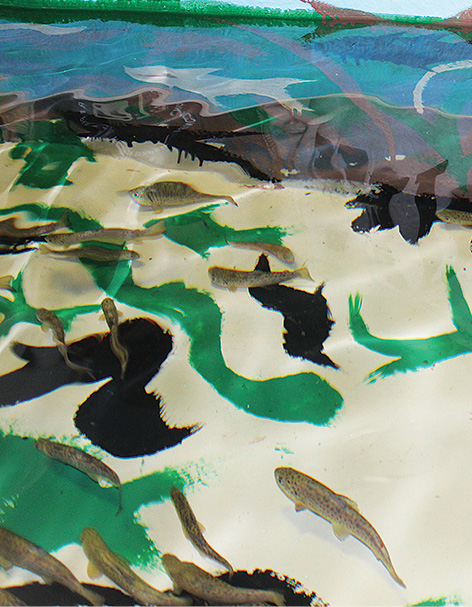
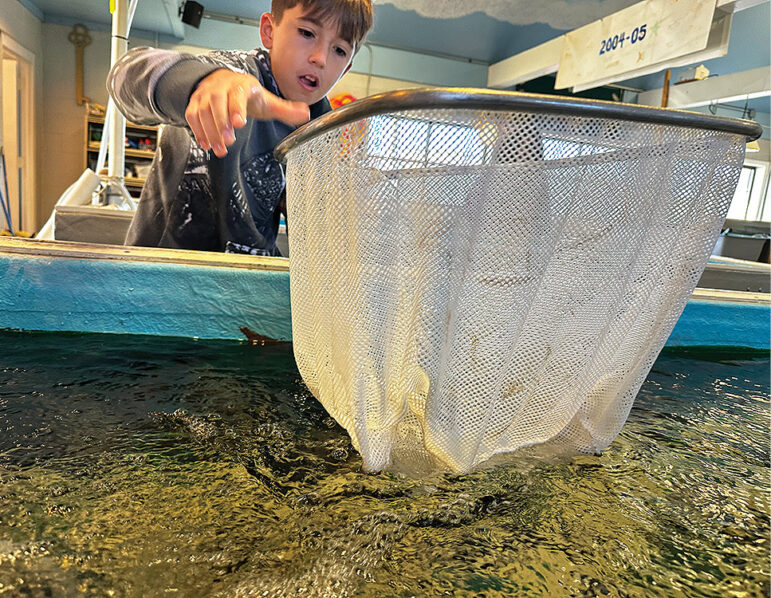
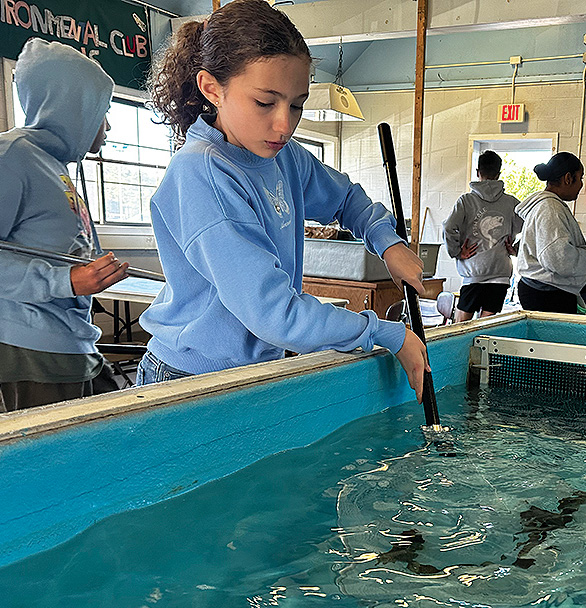
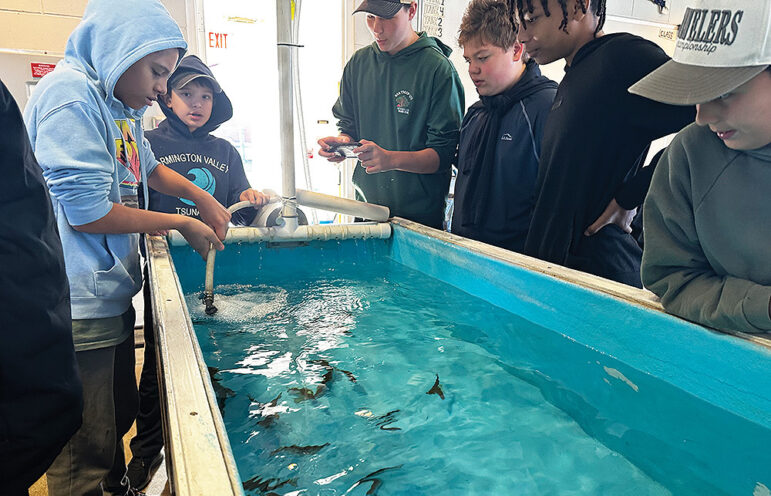
Last month, middle school students enrolled in the Fish Kids program gathered in the Salmon Brook Ecology Center to welcome 150 brown trout. The trout arrived in the back of a CT DEEP truck equipped with a cold-water holding tank with temperatures hovering around 50 degrees Fahrenheit. Students handled the fingerlings with nets, carefully extracting the young trout from the truck and carrying them to one of three holding tanks.
Within 15 minutes, the students had safely transferred the fish into their temporary homes, where the trout will be raised until they are released in May. The raise-and-release program is part of a broader effort to keep our local waterways stocked with fish.
Under the direction of Ted Goerner, the Fish Kids program offers Granby middle school students opportunities to directly address a broad range of local ecology issues, including a new effort to plant sycamores in the riparian corridors of the Farmington and Salmon Brook watersheds. As Goerner explained, “This year, we’re not just raising trout. We’re also raising bareroot sycamore trees grown from seeds gathered from the 300-year-old Gifford Pinchot Sycamore in Simsbury. The sycamore is a hardy, native tree that is important to river ecology.”
Sycamore roots help hold riverbanks intact and prevent erosion. The tree serves as a host to over 40 species of moths and butterflies, a nesting and food source for owls and woodpeckers, and as den sites for raccoons and bats. Their huge lobed leaves also shade the water, keeping it cool for aquatic species, including the introduced brown trout and the native brook trout, which requires cold-water temperatures to thrive.
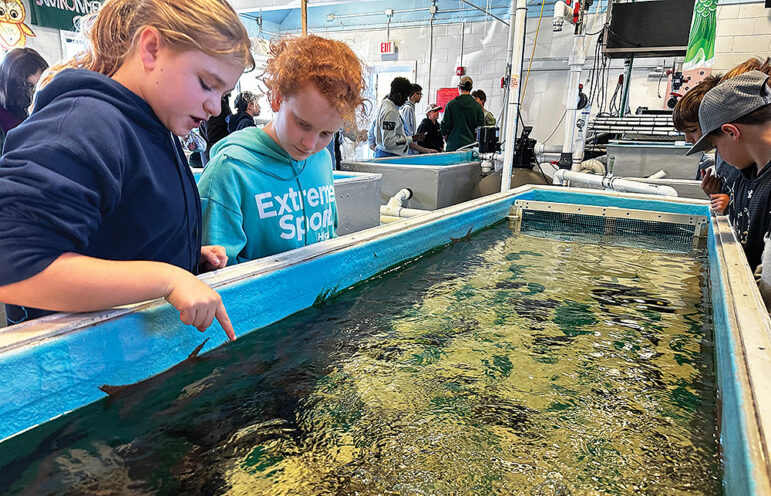
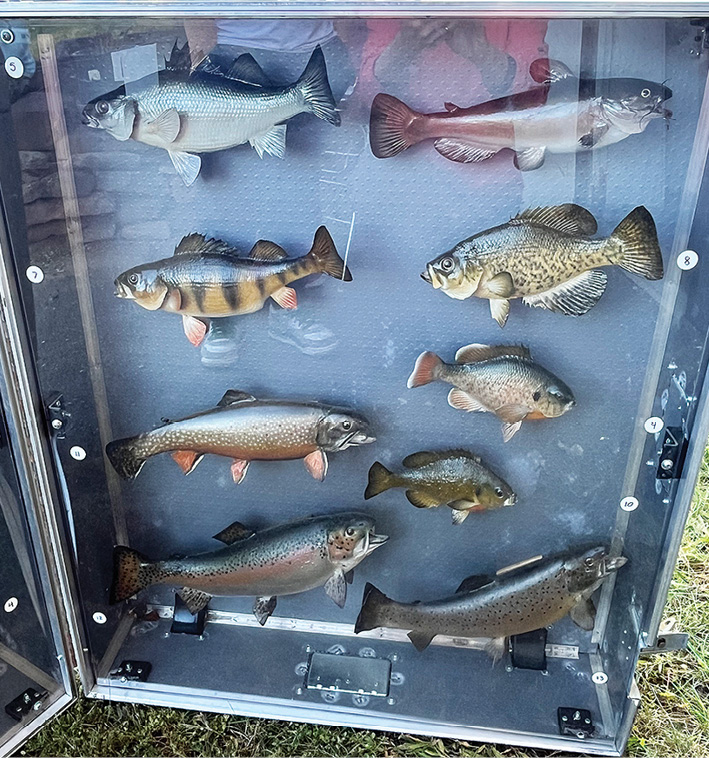
The day after the brown trout arrived, many of the same students participated in an after-school fishing demonstration organized by CT DEEP. According to Goerner, DEEP staff brought a taxidermy display of the gamefish of Connecticut to help students identify common species, including channel catfish, brook trout, rainbow trout, white and yellow perch, large and smallmouth bass, pumpkinseed, black crappie, chain pickerel, northern pike and walleye.
Additionally, the workshop included hands-on lessons on how to set up a rod and reel with tackle, knot-tying demonstrations and interactive lessons on casting techniques. “The Fish Kids really enjoyed the workshop,” Goerner noted, “and when we teach students to fish, we also teach them how to be good river stewards. Now many of the students are eager to get out on the water to practice their fishing skills.”
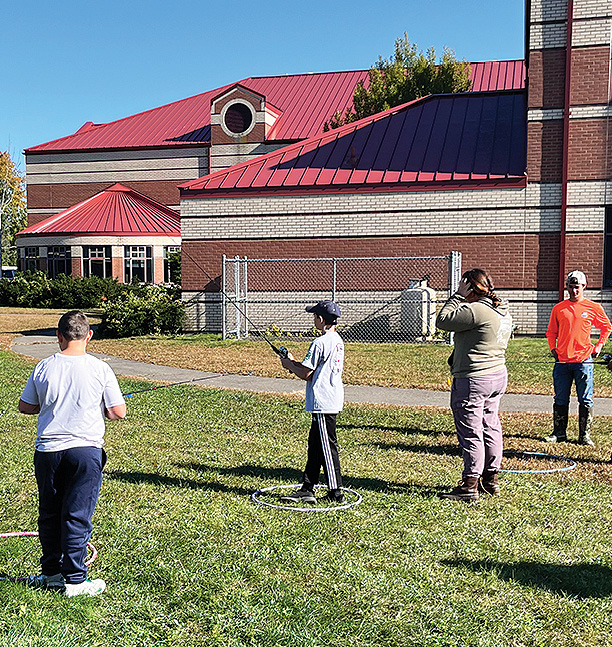
The fishing demonstration was part of DEEP’s Connecticut Aquatic Resource Education program, better known by its acronym: CARE. Since 1986, the CARE program has offered “learn-to-fish” classes to Connecticut residents to foster healthy waterways by raising the next generation of fishermen and fisherwomen. The program is taught by state certified fishing coaches, many of whom serve as volunteers.
Granby residents interested in testing their own fishing knowledge are encouraged to check out the courses available on the Fish with Care website: portal.ct.gov/deep/fishing/care/fish-with-care—connecticut-aquatic-resources-education The website includes interactive games and insightful resources to help residents of all ages learn more about fish species and fish habitats throughout the state, with specific instructions to improve fishing knowledge, skills and techniques.