Unless this is the first edition of the Drummer you are holding in your hands, you have certainly seen the work of Granby photographer Jay Harder. His photos of town sports, seasons and milestones like graduation appear frequently in this paper and various locations around town.
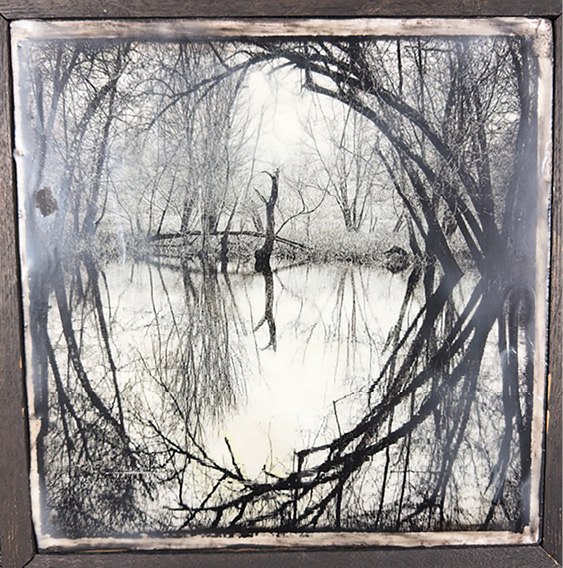
Traditional photography is not Harder’s only art. For the last three years, he has been creating encaustic photos. This art form is deep and textured. It has a vivacity closer to the impressionist work of a Monet or Cassatt than you’d encounter in an ordinary photography exhibit. Using a technique already known to Pliny the Elder in the first century, Harder uses a mixture of beeswax and damar resin to coat his prints and add depth and dimension.
Long before printed photos became possible (albeit to a very few) in the 19th century, encaustic techniques were used to enhance paintings and other substrates. Perhaps the most famous example of a Connecticut resident’s encaustic work is Jasper John’s Flag wherein the Sharon-based artist achieved the ideal texture of the American flag he saw in his dreams upon returning home from military service.
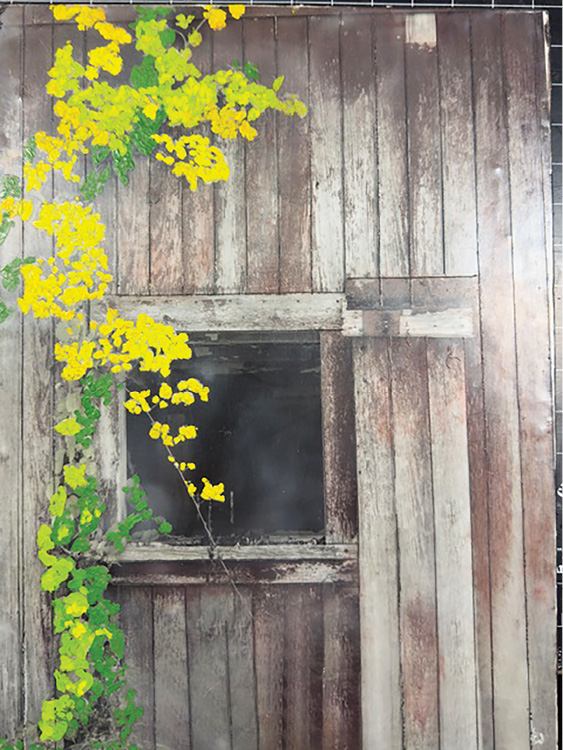
This “bees and trees” combination can restore physical elements of the captured image that may be otherwise lost to the two-dimensional print—the wood grain of the Holcomb Farm barn, leaves and flowers pouring out of a garden box or the chrome shine of polished car parts in a West Granby garage.
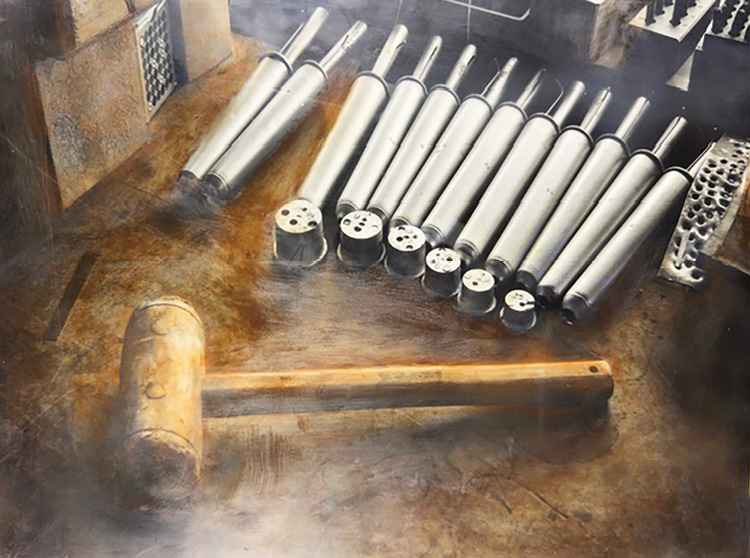
The technique involves melting wax on a hot plate and quickly layering it over a print with various tools (Harder acquired some from his longtime dentist) before it has a chance to harden. After it cools, additional layers can be built upon it until the desired depth is achieved. Color is achieved by adding dry pigment to the wax, allowing for endlessly customizable hues.
Harder learned of the tradition from his membership in Granby’s Camera Club and was quickly interested in learning more. While his initial exposure only demonstrated a simplified version using wax beads over a print melted with an iron, he sought out further instruction from a studio in Winsted and continued to experiment on his own.
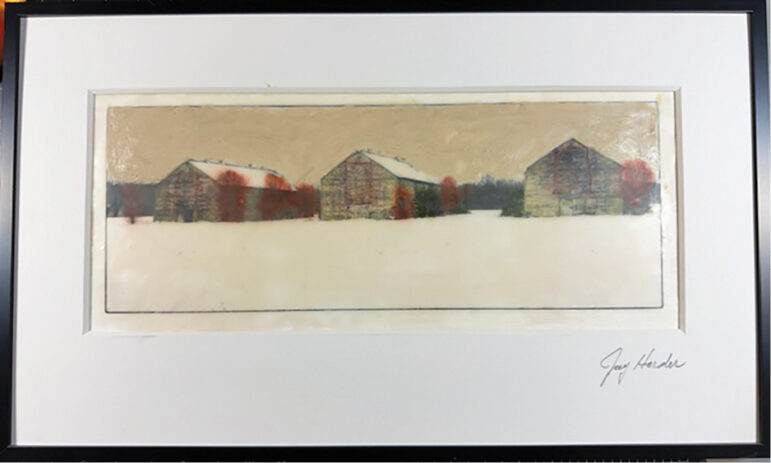
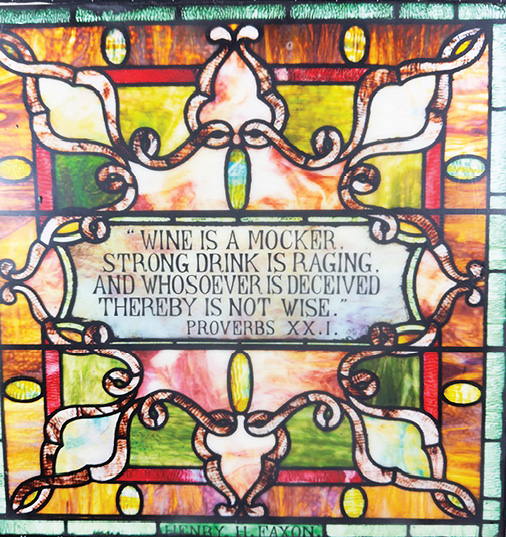
A rather unique approach Harder has innovated is the use of encaustic wax on metallic paper. Given the innate difficulty of bonding, most in his field steer solely towards more textured matte surfaces. Through practice and trial, he has been able to capture the backlight beauty and texture of stained glass in his work.
Viewing this art in newsprint just can’t do justice to it. Encaustic photography needs to be seen in person to fully appreciate. To see some of Harder’s work, a few pieces have found gallery space at JD’s Barber Shop in Granby, or visit the Granby Camera Club that meets at the Granby Senior Center on the first Monday of the month at 7 p.m.