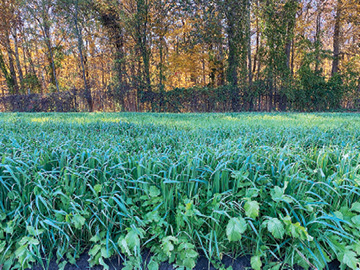
One of the most exciting themes of the 2025 farm season was our decision to rest a significant number of fields by taking them out of vegetable production and keeping them cover-cropped. Cover cropping is a crucial investment for the overall health of the farm. The basic idea of cover cropping is to keep plants growing in the soil for as much of the year as possible—protecting the soil in the winter, keeping it cool in the summer, guarding against erosion from wind and rain, creating habitat for beneficial organisms and enriching the soil through their conversion of bioavailable nutrients.
Each cover crop provides its own unique benefits. Some of our favorites include Austrian winter peas, crimson clover, triticale grain, buckwheat, oats, sorghum, Sudan grass, daikon radish and crotalaria. Cover cropping can be a bit stressful, as there are a million things to do on the farm and it’s important to get the early crops out of the field and the cover crops in, so they have a long, productive growing window. Resting the fields and taking them out of production enhances the benefits of cover crops.
This year, in addition to resting more land, we improved our amendment recipe and spent more per acre on fertility. This combination resulted in stronger production and increased revenue. This is the direction we will continue to follow and at some point, we’ll reach a tipping point where healthier, better-rested fields allow us to reduce fertility inputs, as our long-term investments begin to fully pay off.