
On July 3, in 98° heat, the Department of Public Works stepped up to make the America 250th Committee’s bonfire a fantastic success. The DPW brought wood, spread sand under the bonfire to prevent damage to the parking lot, members and cadets helped build the bonfire and then stood fire watch. Operations Director Stewart Young and his DPW crew show up when this community needs help, summer or winter, regardless of the weather.
Soon, Public Works will be preparing for the snow and ice that lies ahead. DPW employees will be out for every storm’s duration to keep roads, parking lots and sidewalks safe and passable. They’ll drive massive plow trucks equipped with wide blades while spreading sand and salt to help motorists maintain traction. These vehicles use hydraulic systems to maneuver the blades and four-wheel drive to provide better traction as they clear the roads.
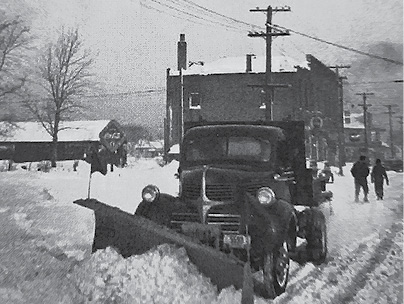
It was in the 1920s that motorized snowplows first began appearing in Granby. Early snow removal involved vehicles like a Model T and a Chevy truck equipped with plows. Chains were put on the tires to provide added traction. But clearing snow in Granby and throughout New England was a vastly different and large undertaking during the late 19th century and early 20th century.
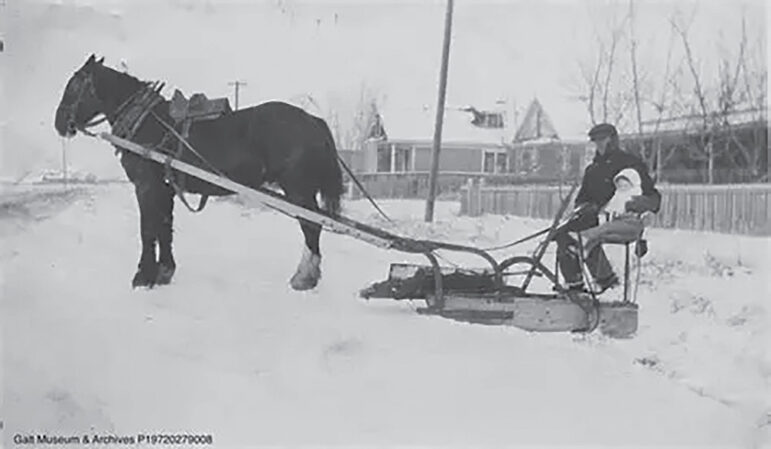
When Granby was formed as a town in 1786, the town government appointed individuals known as Surveyors of Highways who were responsible for maintaining roads all year round. One such individual was Riley Dibble, who lived on Notch Road. He was responsible for Notch Road, Hungary Road and other roads in his district. Dibble had three barns where he kept his animals, firewood and farm equipment including his horse-drawn plow that he used to clear snow from the roads in his district.
When a snowstorm covered the roads, Dibble would hitch his horses to the snowplow and begin clearing the roads. He would start with his driveway, before working to make the roads more passable for horse-drawn sleighs and wagons. His brother in-law and nephew who lived next door helped Dibble with the work. Throughout Granby, other Surveyors of the Highways faced the same responsibilities, working to keep their assigned roads open for their neighbors.
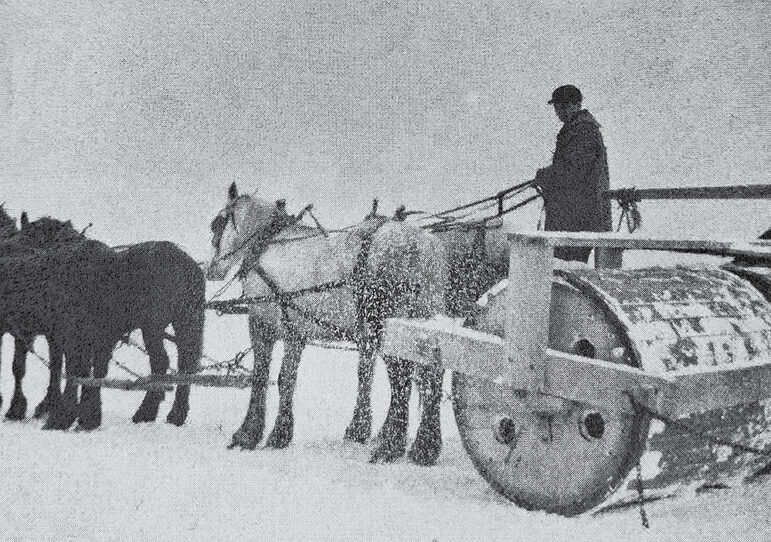
In other New England towns, another way of moving snow was the use of a snow roller. These large cylinder rollers were weighted with sand and pulled by a team of horses. Rather than moving the snow, the rollers packed down the snow, creating a smooth, firm surface for horse-drawn sleighs to travel. This made it easier for residents to travel to the store, visit relatives or conduct their daily business during the winter months.
Snow removal became easier when motorized vehicles and snowplows became the norm. But 150 years ago, making winter travel possible was an entirely different experience. The men responsible for clearing Granby’s roads worked extremely hard, often with little more than a team of horses and a wooden plow, to make roads passable for their neighbors.
So, when the Department of Public Works plows your street this winter, take a moment to appreciate the work they do. Remember, clearing Granby’s roads was once a much harder and time-consuming job. Our modern snowplows may have made winter travel easier, but the dedication of the people keeping our roads open has remained.
To learn more about snowplowing in Granby or the history of the Department of Public Works, join the Salmon Brook Historical Society by calling 860-653-9713 or visit salmonbrookhistoricalsociety.com