
Veterinarian Monique Fitzpatrick’s debut as the Animal Talk contributor was in the June 2024 issue. She promptly won a first-place award from the Connecticut Press Club for her first article focusing on feline enrichment.
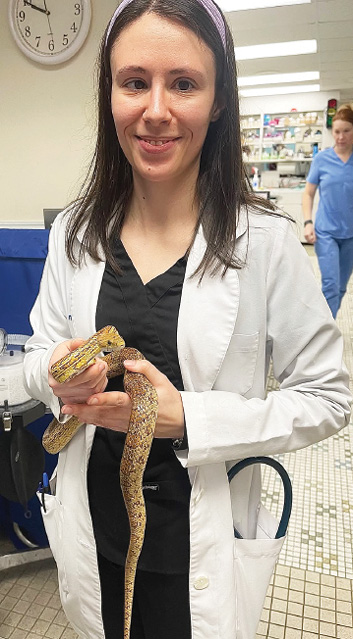
In 2025, she was once again recognized and received an Honorable Mention for her three-part series on exotic pets. Published in the March, April and May issues, Fitzpatrick focused on reptiles/amphibians, small mammals and birds; rabbits and guinea pigs; and ferrets. While veterinary care for dogs and cats is readily available, veterinary care for exotic pets is often hard to come by. Fitzpatrick’s goal is “to open people’s eyes to how wonderful some of these are as pets and to show people that even something as small as a hamster requires vet care.”
While rabbits, hamsters and guinea pigs are often first-time pets for kids, and make very personable pets, there is a serious virus impacting rabbits that owners need to be aware of here in Connecticut. Confirmed in Connecticut in 2022, Rabbit Hemorrhagic Disease Virus (RHDV) causes extreme illness in rabbits. A vaccine has received conditional approval due to the spread of the virus from wild populations to house rabbits. More prevalent on the west coast, “It has moved east and is here to stay,” noted Fitzpatrick, who recommends talking with your veterinarian to know if the vaccine is right for your rabbit.
Many exotic pet owners also have cats and dogs and Fitzpatrick sometimes sees all the family pets during one visit. She noted that one of the most rewarding aspects of her work is educating people about exotic pets and said “Most people don’t realize how much personality a lot of the exotics have.” She also noted that “There is a lot of bad advice online about [exotics] so good education is key to having a healthy exotic pet. Exotics can be fun and rewarding to keep as pets, but typically have very specific needs depending on the species.”