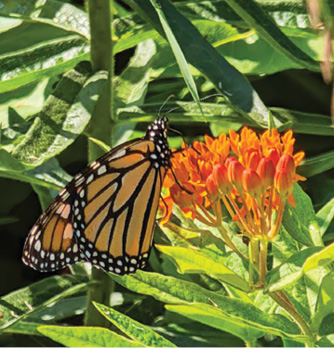
Plant it, and they will come. If you want to see more monarch butterflies gracing your garden next summer, the secret is simple: plant more milkweed.
As a specialist species, the monarch’s survival is entirely tied to this single plant. Female monarchs will only lay their eggs on milkweed leaves. No milkweed, no eggs. Once those eggs hatch, the caterpillars rely exclusively on the plant for nourishment. While milkweed’s milky latex and toxic compounds (cardiac glycosides) gum up the mouthparts and poison other insect species, monarchs have evolved unique adaptations to thrive on it safely.
But monarchs aren’t the only ones in our local ecosystem that depend on this powerhouse plant. Read on to discover the other insects that depend on milkweed.
Plant Spotlight: Butterfly Weed (Asclepias tuberosa)
Wildlife Value: Many bee, wasp, butterfly and beetle species visit butterfly weed for its nectar. It is a larval host plant for the milkweed-specialist monarch butterfly (Danaus plexippus), queen butterfly (Danaus gilippus), and milkweed tussock moth (Euchaetes egle). Monarch caterpillars feed on both the foliage and flowers of butterfly weed, while the adults collect nectar and lay eggs on the underside of the leaves. Sulphur butterflies (Colias spp.), crescent butterflies (Phyciodes spp.) and great spangled fritillaries (Speyeria cybele) all visit the flowers for nectar.
It is an excellent nectar plant for pollinators including the at-risk half-black bumble bee (Bombus vagans) and northern yellow bumble bee (B. terricola).
Selection: Milkweed is vital to the beloved monarch butterfly. A pollinator space would seem incomplete without it. The orange butterfly milkweed was selected by Granby Wildflower Meadow over common milkweed (Asclepias syriaca) because it’s less aggressive and the vibrant orange flowers are striking. Plus, it prefers dryer soils present at the meadow.
Flower and Foliage: In clusters 2–5” across at top of flowering stalk, fruit is typical milkweed seedpod
Bloom Color: vibrant orange
Height: 12–30 in.
Spread: 12–24 in.
Bloom time: mid-summer
Light Requirements: sun
Moisture: dry, average