
On a sunny October afternoon, local writer and gardener David Desiderato showed me around his garden, pointing out the incredible array of native plant species. While many of the plants are going to seed, the white asters and yellow puffs of goldenrod are still blooming and covered in bees.
Desiderato won third place in the 2025 Connecticut Press Club Communications Contest for his May article, “Mays, Shoulds and Musts,” the third award he has received from the press club since beginning the Not Wanted column on behalf of the Granby Conservation Commission in 2019. In this column, Desiderato writes about invasive species: how to recognize them, how to remove them and how to plant native to better support our local pollinator species.
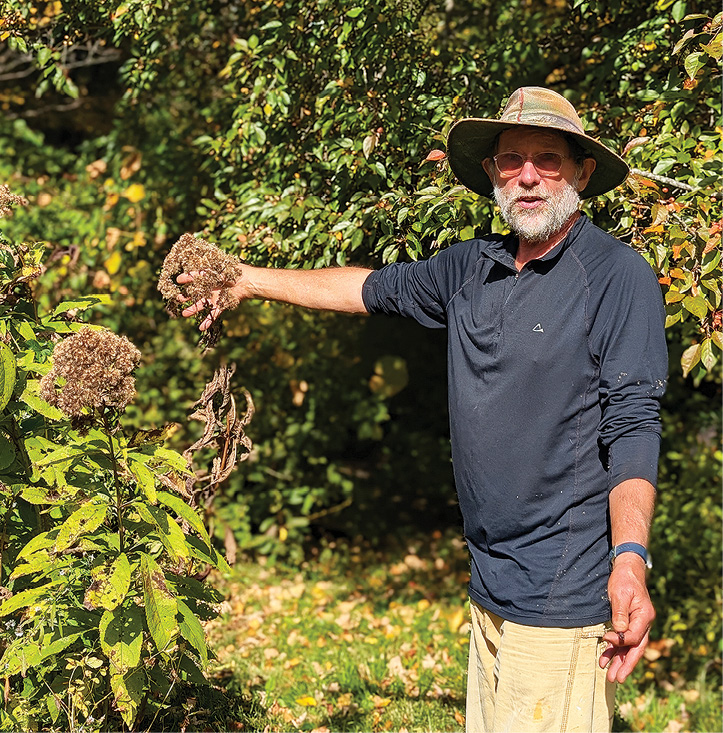
Desiderato grew up in a household with parents who wrote beautifully and precisely, and with a mother who loved gardening; these influences are clear in his Not Wanted column. “The title of the column is intentional,” Desiderato says, “and puts the impetus on us, the people who move the plants around and make them invasive.” In college, Desiderato took a job with a state park maintaining their garden beds and landscaping. While the plants weren’t native and he had no supervisor to teach him, he loved the work and grew a garden at every home he lived in after that summer. His knowledge about native and invasive plant species has been a years-long process through hands-on experience and close observation, and an ongoing series of failures and successes.
In the winning article, “Mays, Shoulds and Musts,” Desiderato offers us clear directives and encouragement at the beginning of each paragraph: First, do no harm. Choose wisely. Get ‘em when they’re young. Get ‘em when they’re few. It’s not hard. and It’s important. As a reader, this article makes the process of “May tasks, discretionary and obligatory” in our own gardens both manageable and concise. In the years since beginning the column and hosting invasive species removal days in Granby, Desiderato has seen an increase in the community’s awareness and encouragement of native plant species. He showed me volunteer boneset and turtlehead in his garden, likely deposited by birds as invasive species are removed and native plant species are given more room to return to the region.
He closed the article with the thought, “Planting twice as many natives as non-natives helps birds harvest the thousands of caterpillars and insects they need to raise each family, for example. It’s not necessary to rip out non-native favorites (as long as they’re not invasive); instead, rebalance by adding natives.” As we closed, Desiderato handed me seeds of fluffy goldenrod, spiky rudbeckia and soft Joe Pye—I left with pockets full of the plants that will rebalance my own garden come springtime.