
It’s June and, as every gardener knows, a wet spring means a wild world of weeds.
Weed is a catchall term, imprecise and subjective—plants growing where they’re not wanted! Lots of weeds are annoying but controllable without chemicals. Others are maddening—no matter what we do, they come back and back and back. Some of the worst are truly invasive—on the state Invasive Plants list (search for CIPWG).
Knowing more about them, how they grow and reproduce, helps us control them. Here are short descriptions of some of the more pernicious invasives bedeviling Granby gardeners.
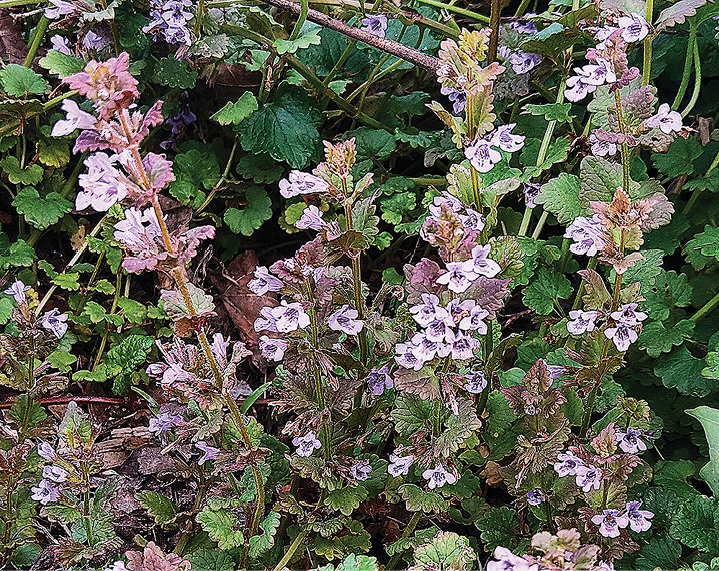
Ground ivy, creeping Charlie, gill-over-the-ground (Glechoma hederacea). This perennial plant is especially frustrating because it puts down fresh roots every few inches and readily breaks off when pulled. It’s common in lawns and eagerly stretches into garden beds where it can form dense, low, dark green mats punctuated by lavender flower spires a few inches high in spring and early summer. Key to control: identify it early when a single root can be pulled, and cultivate the top inch or two of soil to prevent re-rooting.
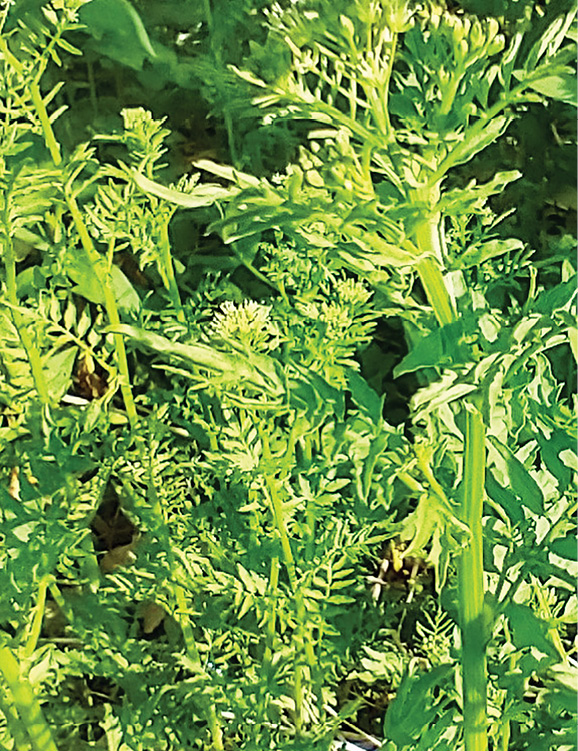
Narrowleaf bittercress (Cardamine impatiens). This fuzzy annual may seem innocuous—slender and easily pulled—but if not controlled early, small populations become dense thickets, crowding out other plants. It prefers moist soil and some shade. Pull it by the roots and discard now, before it flowers and forms seeds.
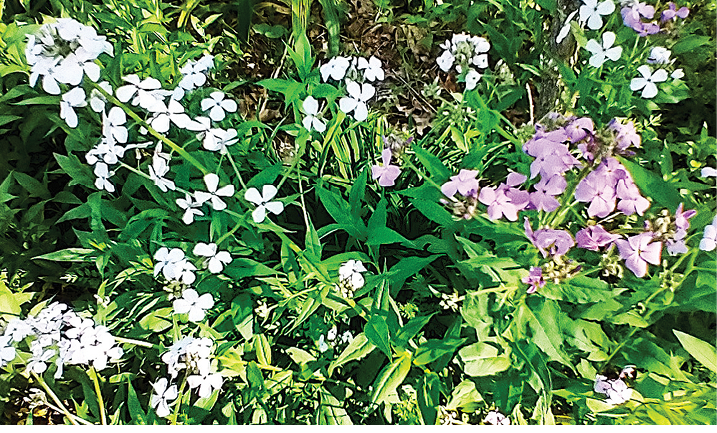
Dame’s rocket (Hesperis matronalis). Fragrant, waist-high, white and pink flowers that may be mistaken for garden phlox make this a too-long tolerated invader. Introduced from Europe several hundred years ago, it’s still sometimes found in wildflower seed packets: check ingredients to avoid planting it. Pull the plants before they set seed to prevent them from dominating shade gardens. A biennial, it takes a few years to control, as seeds last for years in the soil and germinate easily.
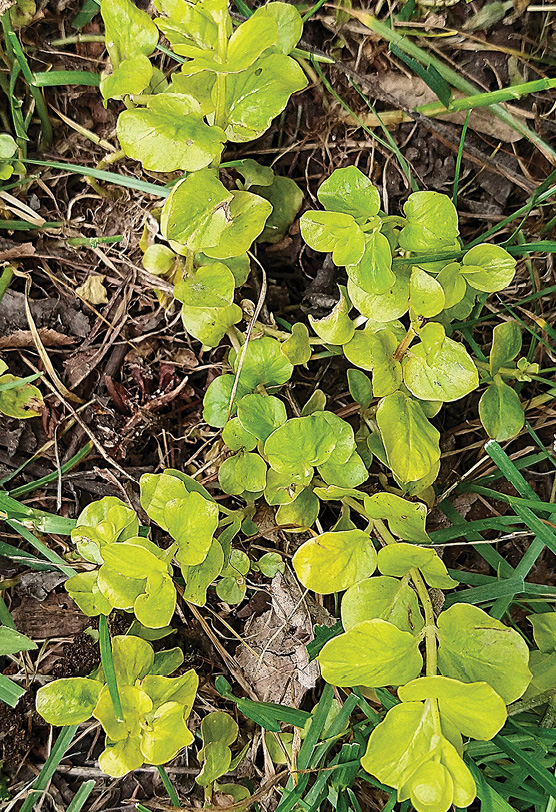
Creeping yellow loosestrife, moneywort, creeping Jenny (Lysimachia nummularia). This attractive low-growing Eurasian native may have appeal as a groundcover, with shiny yellow-green leaves and occasional bright yellow flowers. Especially in moist conditions, it spreads across soil and into lawns, making dense mats that choke out other plants. Control it by tracing stems back to the roots and dig them out.
Fig buttercup, lesser celandine (Ranunculus ficaria). Anyone with concentrations of fig buttercup deserves sympathy and help. This low-growing glossy-leaved perennial explodes in moist soil and is extremely difficult to control due to multiple branching and dense rhizomes. A European native, it was introduced as an ornamental and has charming yellow flowers; it can be mistaken for native marsh marigold, but it takes over moist forest floors and crowds out natives, especially spring ephemerals. Covering dense mats with black plastic for a year or more may be the only non-chemical solution. Control it before it takes control.
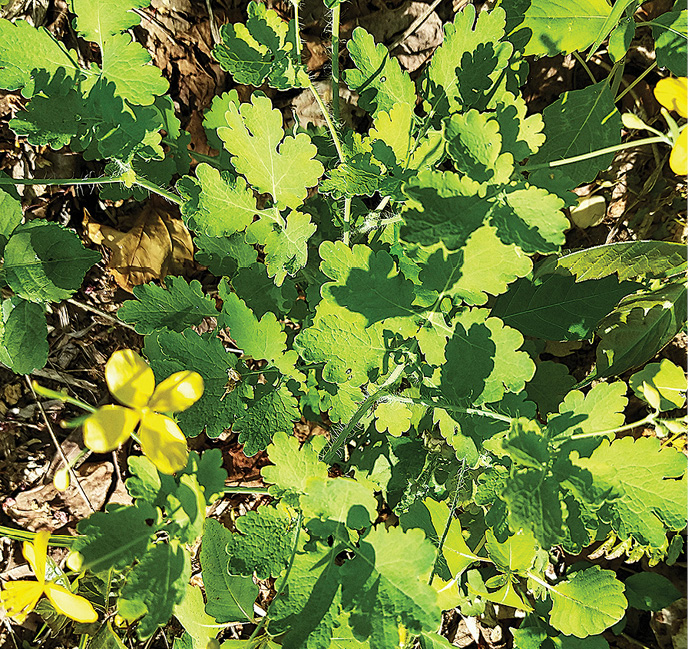
Greater celandine (Chelidonium majus). This pretty fleshy little number with light yellow flowers packs a punch. Once it’s in the seedbank, it pops up everywhere, all season long, especially in part shade and moist soil. Pull up by the roots carefully because it breaks easily, revealing trademark orange innards, and because its sap can be irritating. It can be mistaken for the native beauty celandine poppy, which has slightly more pointed leaf tips, darker, longer lasting flowers, and tends to form clumps rather than scattered seedlings.
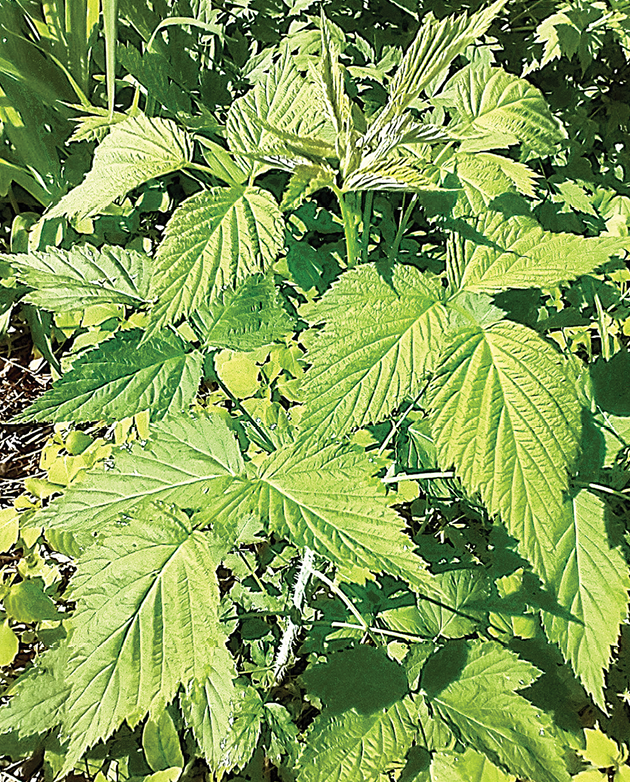
Wine raspberry (Rubus phoenicolasius). Often mistaken for wild raspberries, it flourishes in moist soil and full sun. It was brought from eastern Asia in the 1890s to aid in breeding domestic raspberries and is now invasive in most of the eastern US. It can grow densely, over 6 feet, and its broad leaves choke out other plants. It spreads by seed, and when its cane tips touch the ground and take root. It’s relatively easy to extract whole plants by hand, roots and all, but use gloves—stems are packed with tiny spikes.
More information and photos are available at GranbyInvasivePlants.Weebly.com