“Companion planting” is a good way to think about relationships in the kitchen garden. This is a method of gardening where plants are situated alongside one another for mutual benefit: tomatoes and basil, marigolds and squash, cabbage and thyme, cucumbers and radishes for a few. Each relationship offers something different, whether it’s pest control or shading the soil, attracting pollinators or improving soil fertility. The Farmer’s Almanac, a book that I pick up each year, has a wonderful list of companion plants as a place to start.
The kitchen garden, which may vary in scale and plants according to one’s taste and climate, is usually planned and planted primarily for our tastes. We love tomatoes and strawberries in summer salads, so we grow tomatoes and strawberries. Love roasted potatoes with rosemary, grow rosemary and potatoes. Simply put, we grow what we love to eat.
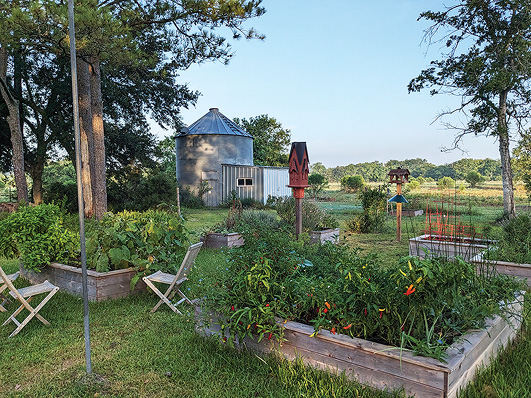
While having coffee with my mother last weekend, sitting on the edge of the raised beds in her kitchen garden, I marveled at the energy that was practically spilling over around us. She runs a gardening center in south Texas where the heat, humidity and insects can make for volatile seasons. To bolster her fruits and vegetables, herbs are nestled in at the base of her vegetables and she tucks flowers in between absolutely everything. Nitrogen-fixing chickpeas and low-growing oregano offer ground cover. A bird feeder stands tall at one edge of the garden, with pollinator-attracting plants growing underneath. The result is four overflowing raised beds, abundant with life of all kinds. She has taught me that when we garden for what the plants need, rather than with only ourselves in mind, they’ll offer abundance in return.
Now take it one step further. Imagine the kitchen garden as a mosaic polyculture of companion plants: a community. When thinking about how to approach planting my own garden in West Granby, I often flip through the writing of poet Ross Gay. Pick a page in any of his books, and he’ll describe gardening like an unruly and marvelous symphony, a cacophony, where the sign of a healthy garden can be determined from its volume. Are there birds singing in the bushes nearby, and are clouds of insects whirring around the flowering plants?
The beautiful thing about a garden is that it is a constant work-in-progress, always being edited and adjusted, and as the season goes on you can take note of what the plants are offering one another and what might still be missing in the plant community. My advice, as passed along by my mother and her mother: don’t be afraid to really fill up your garden bed. Play and experiment with it. A kitchen garden can become much more than a row of plants to be picked from: it can become a balanced ecosystem of relationships.