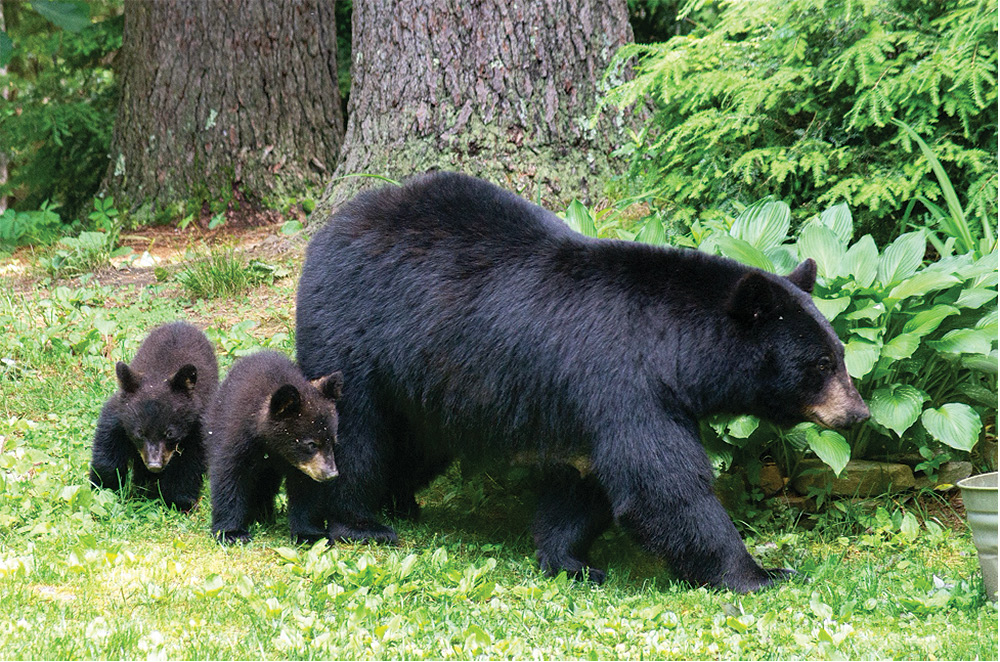
Bears are awakening from their long winter naps and sightings confirm that spring has arrived! Spring becomes a couple of chaotic months for bears and humans and the usual questions arise. How do we keep these large omnivores out of our yards, away from our youngsters and pets, out of garbage bins and our chicken coops? Understanding what’s going on can help put it all in perspective.
Late May begins the American black bear mating season that lasts into late June and kicks off a chain-reaction of behavior in the bear world. It starts with female bears entering estrus, a hormonal change that makes them receptive to mating. But some moms can’t go looking for male companionship with adolescent cubs in tow. So, they unceremoniously force their 16-month-olds into independence, often by chasing them up a tree and walking away.
Meanwhile, hopeful young males over the age of four are seeking romantically inclined females by tracking their scent. Older, dominant males travel far and wide looking for their favorite female to court and may share their affections with others along the way. Mothers with cubs born this January are on constant alert keeping their four-month-old cubs out of the fray. And those yearlings that mom chased up a tree? They’re running around confused, hungry and too curious for their own good. It’s spring in bear country. The good news is the turmoil subsides by late June. Bears will still wander through neighborhoods, but the springtime, hormone-driven activity will subside—for this spring.
From the first mature males leaving their dens in March to new moms introducing tiny cubs to the world in late spring, their essential need is to find food. Ahead of mating season, adult males must regain weight lost in the den—they’ll lose up to 20 percent of their weight by the end of mating season. New moms depleted their fat store in the den feeding tiny newborns that have grown from less than a half-pound to four–10 pounds and are still nursing. Yearlings and young adult bears, assisted by an incredible sense of smell, are still learning where to find food in the wild. It helps that a bear can smell food from one to three miles away. It’s also all the guidance it needs to identify your trash bin, hen house, chicken feed, dog food or bird feeder.
Bears and trash
Discouraging bears from roaming the neighborhood or visiting your yard requires managing enticements—proactively eliminating or diminishing the availability of food sources. Most importantly, keeping your trash/garbage/recycle bins in a fenced-in space, shed or garage. Taking your bins to the curb the morning of trash pickup is essential. If this isn’t possible, consider purchasing a bear-proof garbage bin from USA Waste and Recycling. It’s a proven fact that these two actions significantly reduce bear encounters—and the main cause of bear home break-ins in Connecticut.
Bears and birdfeeders
While backyard bird feeders attract bears, they are not outlawed by Connecticut, but DEEP strongly advises taking feeders down from March through December to prevent bear visits, feeder destruction and human encounters. In 2021, Granby passed a strict ordinance prohibiting direct and intentional feeding of bears, punishable by a $250 fine per offense. While bird feeders are considered “unintentional” feeding in Granby, the police or animal control may issue warnings if a bird feeder is attracting bears. Continued bird feeding becomes a violation with similar consequences if the warning is ignored.
Bears and chickens
Warm weather meals for chickadees and cardinals are problematic, but it’s another bird that causes the most bear-related angst. Over the past few years, backyard chicken flocks have become a neighborhood staple. More than 11 million households in the U.S. have laying hens in their backyard.
In bear country that’s a bunch of fast-food joints for the always-hungry bears. A single visit to a chicken coop may serve up a meal of three chickens, a dozen eggs and a pound of chicken feed—a 7,000 calorie treat for Buster. Bears remember the address and will return.
There are proven ways to keep problem bears (and raccoons, fox and coyotes) at bay. Most frequently recommended by DEEP, the Connecticut Agricultural Extension Service and other chicken owners, are electric fencing and a sturdily-built coop. Chicken wire strung between posts and a prefab coop won’t stop a determined bear. Adding electric fencing to an existing yard or including it with new construction can save money, aggravation, heartbreak and possible human or pet interactions. It’s an investment to consider before ordering your new chicks.
BearWise, a nation-wide resource of the Association of Fish and Wildlife Agencies, was developed by bear biologists from many states to provide consistent education and information about coexisting with bears. Its programs and local presentations share guidelines for living with neighborhood bears, bears on the hiking trail and bears in campgrounds, and is an excellent source of information about raising chickens in bear country.
Learn more about co-existing with your neighborhood bears and how to keep your chickens safe at BearWise.org and watch for BearWise or DEEP presentations locally.
Editor’s Note: Check this month’s Bonus Pages for BearWise tips for protecting your backyard flock.