Two harbingers of spring are the mourning cloak butterfly and the rising sap of oak and maple trees. The mourning cloak is one of several species that overwinter as adults, dark brown, almost black, with a line of iridescent spots and a border of bright yellow.
They produce large amounts of sorbitol and other chemicals that act like natural antifreeze, and stay tucked underneath bark or layers of leaf litter until spring. When they emerge their first order of business is food, and oak and maple sap are their preferred source. I recall seeing a mourning cloak sitting on the spile (or tap) of a sap bucket, which must have been quite a convenience.
The mourning cloak represents resilience, with a name based on the cloak worn by people mourning the loss of a loved one. Another analogy, attributed to British entomologist L. Hugh Newman, imagines a girl in mourning who defiantly lets a few inches of a bright dress show from beneath her cloak. Wintering in New England this year seemed like an act of defiance in itself but March brings spring—a promise Mother Nature always keeps.
March is sugaring season, with white plumes of steam above the trees announcing that sap boiling is in progress. Visit a local sugar house and, if allowed, climb up into the rafters. I love being surrounded by maple steam; it’s like a spring sauna for my winter-weary soul.
Here is a simple but delicious maple-syrup-time recipe.
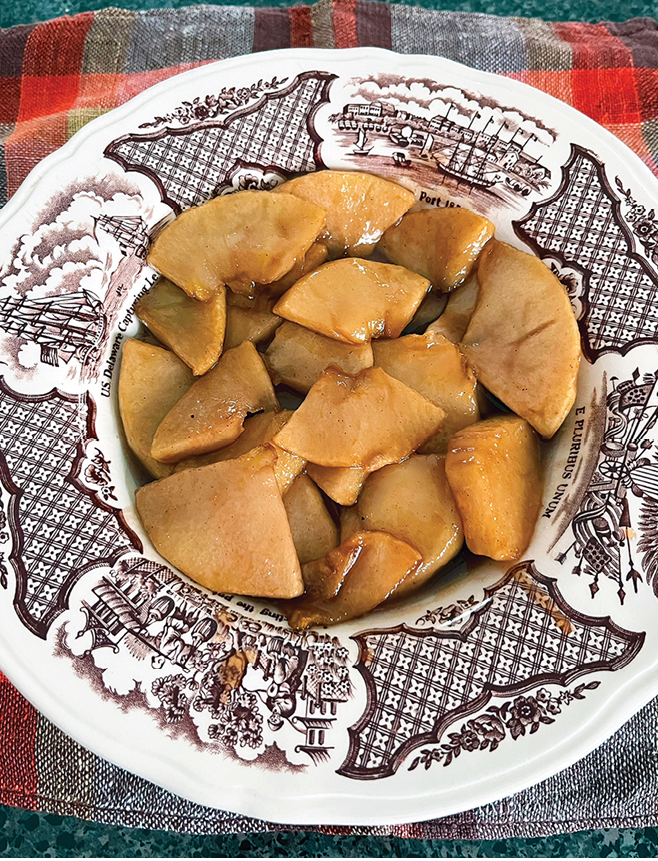
Maple Caramelized Apples
Ingredients
2 cups peeled and sliced apples (firm, sweet-tart varieties such as Honeycrisp or Granny Smith)
1/4 cup maple syrup
3 Tablespoons butter
1/4 cup white sugar
1/2 teaspoon apple pie spice
Directions
Toss apples with maple syrup.
In medium saucepan melt the butter and add the sugar and apple pie spice. Mix together to blend. Add apples and stir to coat. Cook for 15 minutes over medium heat, or until mixture thickens and just begins to brown.
For a thicker glaze, whisk 1 tablespoon of cornstarch with 2 tablespoons of maple syrup and pour into apple mixture. Simmer for another 1 to 2 minutes or until the mixture has thickened.
Remove and serve warm as a topping for ice cream or pie, or as a sweet side dish.