Two years ago in this paper, I introduced myself to the community of Granby. In that introduction, I offered up a host of financial metrics on the Town of Granby.
In this Drummer article, I’ll refresh some of those metrics as an introduction to the coming FY27 budget process. That budget process will culminate in you, the residents and voters, going to the polls on Monday, April 20, to vote on the budget that runs your community.
In Connecticut, there are 169 cities and towns, and the state produces a financial compendium of information on all of them, with the most recent publication dated December 2025. Because I’m an analytical guy by training, let me share why Granby is special—by the numbers.
Please see the following table for a comparison of Granby to other state municipalities.
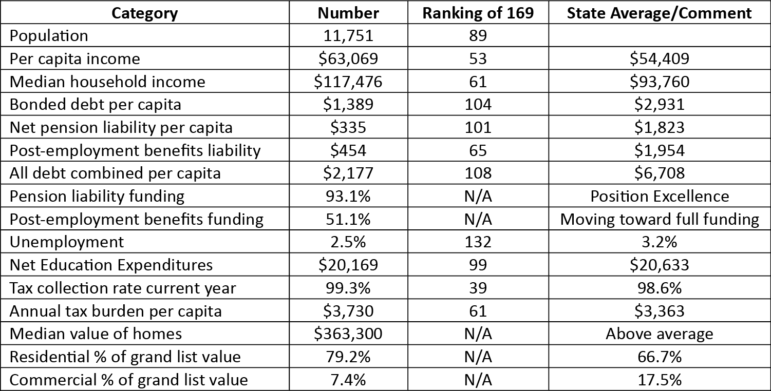
As I indicated two years ago and it is still true today, as I study the numbers I see a community with an impeccable bond rating, low bonded indebtedness, a fully funded pension plan, a solid fund balance, a string of annual balanced budgets and a community with above average per capita and household incomes that deliver educational excellence.
Compared to the other 168 Connecticut municipalities, the financial condition of Granby is a testament to the hard decisions on spending and taxation that your elected officials have made over several decades.
In closing, let me pass along one more important number as we enter budget season—$450,000. For the average Granby homeowner to reduce your taxes by $100, you would need to identify new town revenue sources such as $13 million in Grand List growth, or fee increases of $450,000 or $450,000 of budget cuts. The number that moves the tax needle down by $100 is $450,000.
As always, I welcome open dialogue about all things Granby, and I can be reached at 860-844-5302 or at Mwalsh@Granby-ct.gov